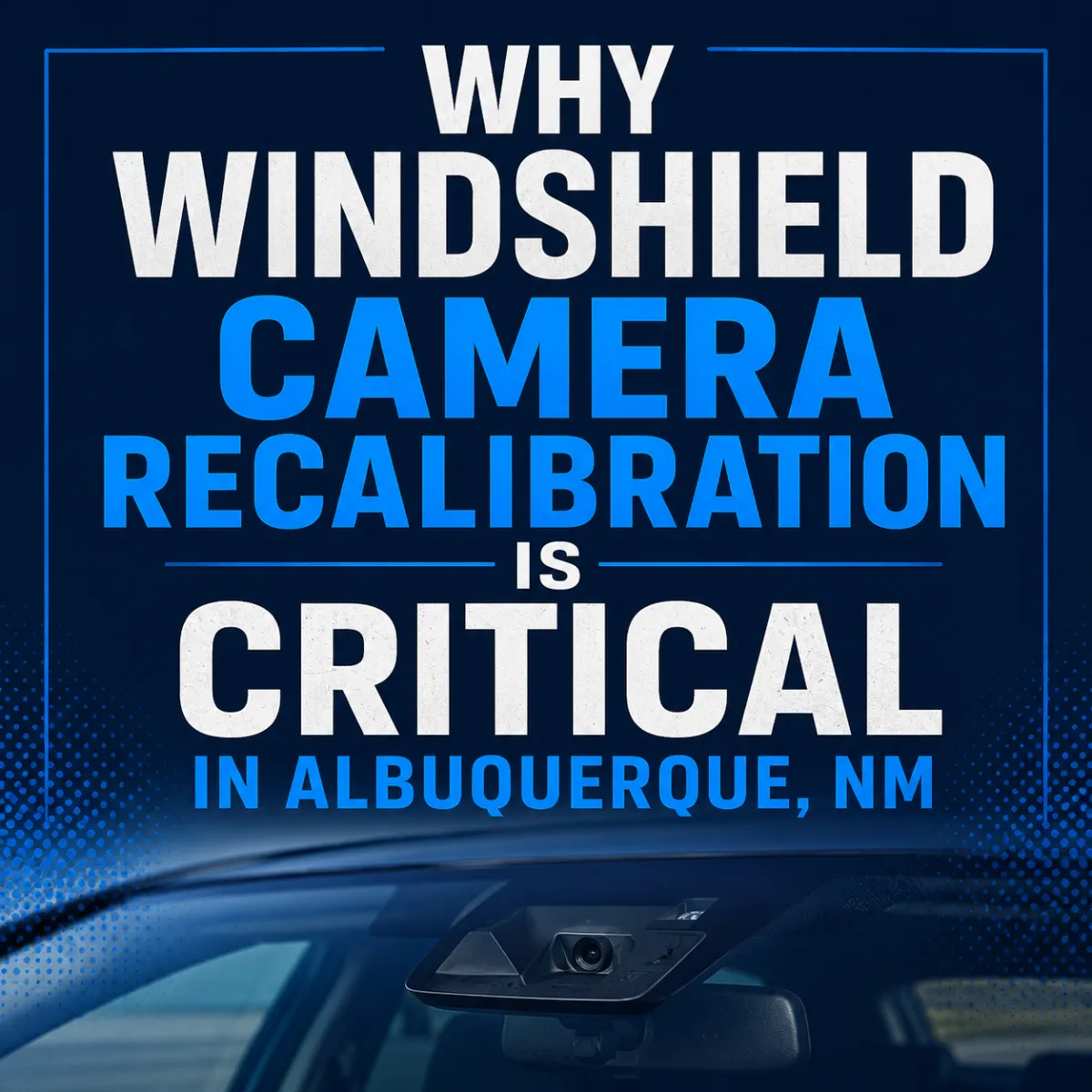
Why Windshield Camera Recalibration Is Critical in Albuquerque, NM
Replacing a windshield used to be mostly about the glass.
On many newer vehicles, that is no longer the whole job.
If your vehicle has a camera mounted near the top of the windshield, that camera may be part of an Advanced Driver Assistance System, commonly called ADAS. Depending on the vehicle, it can support features such as lane departure warnings, lane-keeping assistance, forward collision alerts, traffic sign recognition, and other driver-assistance functions.
That means replacing or disturbing the windshield can affect more than your view of the road. It can affect the position and operation of equipment your vehicle uses to interpret what is happening in front of you.
This is why windshield camera recalibration can be a critical part of a properly completed windshield replacement.
For Albuquerque drivers dealing with cracked glass, highway debris, intense sun, dust, and changing road conditions, understanding this extra step matters.
At RND Auto Detailing and Glass Repair LLC, we believe windshield service should be approached as a safety service, not simply a glass swap.
What Is Windshield Camera Recalibration?

Windshield camera recalibration is the process used to make sure a windshield-mounted camera is correctly aligned and operating according to the vehicle manufacturer's requirements.
Think about what the camera is being asked to do.
It may need to identify lane markings, vehicles, signs, or other objects while your vehicle is moving. To do that correctly, the system needs to know precisely where the camera is positioned relative to the vehicle and the road.
A windshield replacement can change that relationship.
Even when the new windshield looks perfectly installed to the human eye, a camera system may require a calibration or relearn procedure after the work is completed.
Manufacturer procedures vary significantly. Some vehicles use static calibration, some use dynamic calibration, and some require a combination of procedures.
The important point is simple:
If your vehicle manufacturer specifies camera calibration following windshield replacement, that procedure is part of completing the job correctly.
Why Does a Windshield Replacement Affect the Camera?
The windshield is not simply something the camera looks through.
On many vehicles, the windshield and its mounting hardware establish the camera's physical position.
When a windshield is removed, replaced, or installed incorrectly, several variables can affect the camera system:
- Camera mounting position
- Camera bracket alignment
- Correct windshield specifications
- Glass characteristics in the camera's viewing area
- Camera removal and reinstallation
- Changes in the camera's relationship to the vehicle
Manufacturer service information demonstrates why these details matter.
For example, a 2026 service bulletin published through NHTSA identifies incorrect windshield installation, improper bracket alignment, incorrect glass, tints, and other alterations as possible factors affecting front-camera performance and calibration.
Other manufacturer guidance specifically instructs technicians to perform camera calibration procedures after windshield replacement.
In other words, the issue is not whether the new windshield looks straight.
The question is whether the vehicle's camera sees the road the way the manufacturer intended.
What Safety Features Can Depend on a Windshield Camera?
Every vehicle is different, but windshield-mounted cameras can support several Advanced Driver Assistance System functions.
Depending on the make, model, year, and equipment package, these may include:
- Lane departure warning
- Lane-keeping assistance
- Forward collision warning
- Automatic emergency braking support
- Traffic sign recognition
- Adaptive cruise control functions
- Automatic high-beam assistance
- Pedestrian or object detection
Not every vehicle uses its camera for every one of these functions. Some systems combine cameras with radar, ultrasonic sensors, or other equipment.
That distinction matters.
ADAS is a network of technologies, not a single sensor.
If your vehicle has a windshield-mounted camera, the safest approach after windshield replacement is to determine exactly what the manufacturer requires for that particular vehicle.
Can a Camera Be Slightly Misaligned and Still Look Normal?
Potentially, yes, and that is one reason calibration matters.
You cannot reliably determine camera alignment simply by sitting in the driver's seat and looking at the windshield.
The glass may appear correct. The camera housing may appear secure. There may be no obvious visual indication that anything needs attention.
Yet manufacturer service information documents calibration-related diagnostic trouble codes and lane-departure system warnings following windshield replacement or repair work.
A modern driver-assistance camera is designed to interpret the road from a specific position.
Precision matters.
That principle fits how we approach vehicle care at RND. Whether we are working with glass, paint correction, ceramic coating, or detailing, small details can determine the quality of the final result.
With a safety-related camera system, those details become even more important.
Static vs. Dynamic ADAS Calibration
One of the most common questions drivers have is, "How is my windshield camera actually recalibrated?"
The answer depends on the vehicle.
Static Camera Calibration
Static calibration is generally performed with the vehicle stationary.
The procedure may require specialized targets or patterns positioned at manufacturer-specified distances and locations relative to the vehicle.
The environment and vehicle setup may also have specific requirements.
Precision is essential because the calibration procedure is establishing reference points for the camera.
Dynamic Camera Calibration
Dynamic calibration generally involves driving the vehicle under specific conditions while the system performs a calibration or relearn procedure.
Those conditions can vary by manufacturer.
For example, manufacturer service information published through NHTSA shows procedures that may specify driving speed, road configuration, visible lane markings, lighting, weather conditions, or minimum driving periods.
Some Vehicles Require Both
Certain vehicles may require more than one procedure.
That is why there is no responsible one-size-fits-all answer to windshield camera calibration.
The correct process should be determined by the requirements for the specific year, make, model, and ADAS equipment installed on the vehicle.
Why Albuquerque Driving Conditions Make Proper Calibration Important
Albuquerque gives vehicles plenty to deal with.
Drivers regularly encounter bright New Mexico sunlight, blowing dust, highway debris, construction zones, faded or changing pavement markings, and rapid transitions between intense light and shadow.
Consider a normal drive from Northeast Heights toward I-40.
You might encounter strong afternoon glare, changing lane configurations, construction, heavy traffic, or dust within a relatively short trip.
A camera-based driver-assistance system already has a complicated job.
It does not need an improperly positioned camera making that job harder.
Drivers around Uptown Albuquerque, North Valley, Rio Grande Blvd, Sandia High School, Expo New Mexico, and the I-40/Louisiana Blvd area rely on their vehicles every day. When a windshield is replaced, restoring the vehicle correctly should include identifying whether its camera system requires recalibration.
Does Every Windshield Replacement Require Camera Recalibration?
No.
Not every vehicle has a windshield-mounted ADAS camera, and recalibration requirements vary among manufacturers and models.
However, if your vehicle does have a forward-facing camera, you should ask about calibration before assuming the windshield replacement is complete.
A good starting question is:
"Does my vehicle require ADAS camera calibration after this windshield is replaced?"
The answer should be based on the manufacturer's procedures for your specific vehicle.
That is much better than assuming it does or does not need calibration based only on what another vehicle required.
What Happens If You Skip Windshield Camera Recalibration?
The exact consequences depend on the vehicle and system.
Potential issues can include warning messages, diagnostic trouble codes, unavailable driver-assistance functions, or camera-based systems that do not operate as intended.
One manufacturer bulletin, for example, documents front-camera calibration and mounting faults associated with complaints involving lane-departure warnings after windshield replacement or service work.
This is why RND takes a precision-first view of windshield work.
A windshield is part of a modern vehicle's safety environment. On an ADAS-equipped vehicle, the glass, camera, mounting system, electronics, and calibration requirements may all be connected.
The mission is not merely to get new glass into the opening.
The mission is to return the vehicle properly prepared for the road.
How Do You Know If Your Vehicle Has a Windshield Camera?
Look near the top-center portion of your windshield, usually around or behind the rearview mirror.
You may see a camera or sensor housing facing forward through the glass.
You can also check:
- Your owner's manual
- Your vehicle's ADAS feature list
- Lane-assistance or collision-warning settings
- Equipment information for your specific VIN
- A qualified glass or automotive service professional
Do not assume that a dark housing behind the mirror is "just a sensor."
Modern vehicles can package several technologies in that area.
If you are unsure, ask before scheduling the windshield replacement.
What Should Albuquerque Drivers Ask Before Windshield Replacement?
Before choosing a shop, ask questions beyond the price of the glass.
1. Does My Vehicle Have ADAS?
The shop should identify whether your windshield is associated with a camera or other driver-assistance equipment.
2. Does the Manufacturer Require Recalibration?
This should be determined for your specific vehicle rather than guessed.
3. What Type of Calibration Is Required?
Ask whether the procedure is static, dynamic, or a combination.
4. Is the Replacement Glass Correct for My Vehicle?
Correct glass selection matters, particularly around camera-equipped windshields.
5. How Will You Confirm the Procedure Is Complete?
A professional windshield replacement should leave you confident about what was performed and what your vehicle required.
Those are not unreasonable questions.
They are smart questions from an informed vehicle owner.
Windshield Care Is About More Than Fixing Cracked Glass
At RND Auto Detailing and Glass Repair LLC, our philosophy comes from military service: mission-focused, disciplined, and precise.
We bring that same approach to the vehicles Albuquerque families, professionals, veterans, and enthusiasts depend on every day.
A cracked windshield is easy to view as an inconvenience.
We see the bigger picture.
Your windshield contributes to visibility and protection, and on many newer vehicles, it also provides the mounting and viewing area for sophisticated driver-assistance technology.
That is why precision matters.
The same philosophy carries across our services, including windshield repair and replacement, auto detailing, ceramic coating, headlight restoration, paint correction, scratch removal, glass polishing, and water spot removal.
A vehicle should not simply look better when the work is finished.
It should be cared for correctly.
Frequently Asked Questions About Windshield Camera Recalibration in Albuquerque
Does my windshield camera need recalibration after replacement?
It depends on your vehicle. Many camera-equipped vehicles require a calibration or relearn procedure after windshield replacement. The manufacturer's procedures for your specific year, make, and model should determine what is required.
How long does ADAS camera calibration take?
It varies. Static and dynamic procedures have different requirements, and dynamic calibration may depend on suitable road, traffic, weather, lighting, and lane-marking conditions.
Can I drive without recalibrating the camera?
Follow the manufacturer's repair requirements and any instructions given by the service provider. If calibration is required but incomplete, do not assume ADAS features are functioning correctly simply because no obvious problem is visible.
Will my dashboard tell me if calibration is wrong?
Sometimes a vehicle may display a warning or store a diagnostic trouble code, but you should not rely on a dashboard warning as your only method of determining whether required calibration was completed.
Is ADAS calibration only necessary after an accident?
No. Depending on the vehicle, windshield replacement alone can trigger a manufacturer-specified calibration procedure.
Can Albuquerque weather affect dynamic calibration?
It can. Some manufacturer procedures specify conditions involving visibility, lane markings, speed, roadway type, or weather. One manufacturer procedure specifically notes that rain, snow, nighttime, sunrise, and sunset can extend the calibration process.
Trusted Veteran-Owned Windshield Service in Albuquerque
Modern vehicles are getting smarter, but that means seemingly simple repairs can require greater precision.
Windshield replacement is a perfect example.
If a forward-facing camera is mounted to or positioned behind your windshield, replacing the glass may only be one part of restoring the vehicle correctly. Identifying and completing the proper camera recalibration procedure can be essential to ensuring the vehicle's driver-assistance technology is ready for the road.
For Albuquerque drivers, that is not a detail worth overlooking.
It is part of doing the job right.
At RND Auto Detailing and Glass Repair LLC, our veteran-owned approach is built around discipline, integrity, reliability, and attention to detail. Whether you need a chip inspected, windshield replacement, glass restoration, auto detailing, ceramic coating, or other vehicle care, our goal is simple: protect your vehicle and help keep it mission-ready.
RND Auto Detailing and Glass Repair LLC
12910 Central Ave SE, Albuquerque, NM 87123
Phone: (505) 312-2455
Email: [email protected]
Call (505) 312-2455 to schedule an appointment or ask about your windshield and camera system.
And if RND has helped restore and protect your vehicle, leave us a review and share how your ride looked after your visit. Your feedback helps other Albuquerque drivers find a local, veteran-owned shop they can trust.